
EN 
Shop
Kreson AG distributes selected beauty, personal care and wellbeing brands. If your brand is ready for the Swiss market, we would be pleased to review your portfolio and explore a potential partnership.
We work with brands that have a clear product proposition, proven market demand and the operational readiness required for Swiss retail and online distribution.

 Established demand
Brands with existing sales traction, consumer demand or successful distribution in at least one prior market.
 Retail-ready products
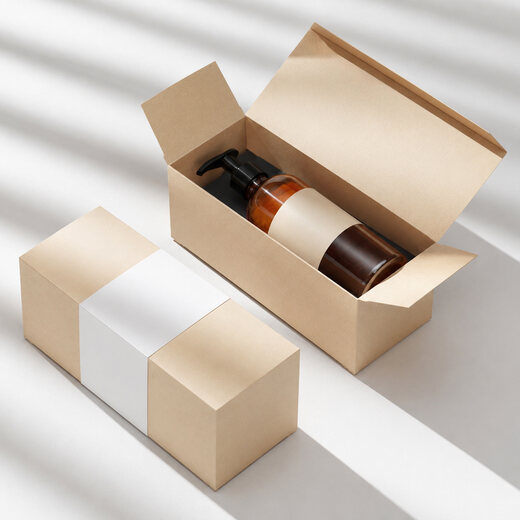
Products with professional packaging, stable supply, clear pricing and a positioning suitable for retail distribution.
 Regulatory readiness
Complete product documentation for EU and Swiss requirements, including formulas, labelling, claims and relevant certificates.
 Category fit
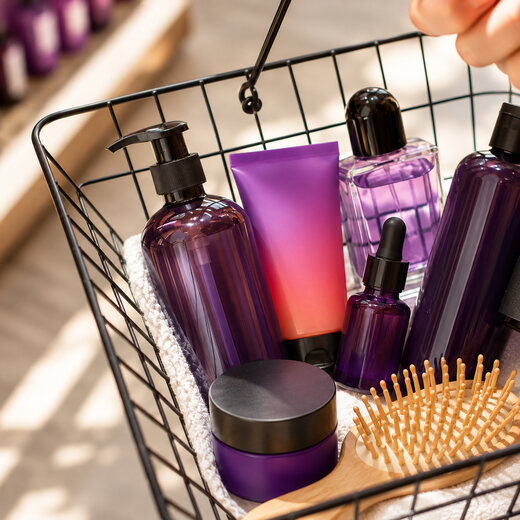
Beauty, hair care, skincare, personal care, fragrance, wellbeing, supplements and grooming tools.
 Long-term ambition
Brand owners looking for structured market development in Switzerland, not only short-term product placement.
 Commercial alignment
A viable pricing, margin and trade-term structure that supports sustainable growth in Swiss retail.
We review your brand, product category, positioning, pricing, documentation and existing market performance.
We assess the brand’s potential for Switzerland, including category relevance, retail fit, channel opportunities and regulatory readiness
If there is mutual fit, we define the potential distribution model, commercial setup, operational requirements and launch approach.
We prepare product data, compliance, import, warehousing, retail communication and launch materials.
After launch, we focus on retail expansion, assortment growth, trade marketing and long-term brand performance.
For retail, in practice yes. Switzerland is outside the EU and the EEA, so it has its own import, compliance and labelling requirements, and Swiss retailers generally list brands through an established local distribution partner rather than through direct contracts with international brands. A distributor handles import, Swiss regulatory compliance, warehousing and the retail relationships needed to get a brand listed and kept on shelf. Kreson provides this as a single partner for the Swiss market across beauty, personal care and wellbeing.
Swiss retailers assign listings through annual assortment negotiations with their category buying teams, not through open applications. A brand is presented to the buyer with its positioning, pricing and supporting trade investment, usually by an established distribution partner the retailer already works with. Listings are then reviewed each assortment cycle. Kreson holds these relationships across Swiss drugstores, pharmacies, perfumeries and marketplaces, and represents its brands directly in those negotiations.
Timelines depend on regulatory readiness and the retailers’ annual planning calendars. Compliance and import setup can run in parallel with the commercial work, but retail listings are typically agreed in fixed annual assortment windows, so the first listing often aligns with the next available cycle rather than an arbitrary date. A brand with complete EU documentation is usually faster to prepare, since much of it transfers to Swiss requirements. Kreson maps a realistic timeline for each brand during the review stage.
No, and the two categories sit under different Swiss regimes. Cosmetics fall under the FDHA Ordinance on Cosmetic Products (VKos/OCos); food supplements fall under Swiss food law, the Federal Act on Foodstuffs (FSA) and the Ordinance on Food Supplements (FSUAO). Both are closely aligned with the equivalent EU rules but legally independent, so EU compliance does not transfer automatically in either case. Kreson manages Swiss compliance for each brand under the framework that applies to it.
Yes, in effect, for cosmetics. The responsible contact for the authorities must be based in Switzerland; an EU Responsible Person is not sufficient. The obligation sits with the Swiss importer or distributor, who may formally appoint a Swiss-based representative to hold it. Switzerland has no pre-market notification portal equivalent to the EU’s CPNP; instead, the importer must hold a complete product information file and cantonal laboratories carry out market surveillance. As Swiss importer, Kreson holds this responsibility for its partner brands.
No pre-market authorization is required for standard food supplements, but there are important exceptions. Supplements are treated as foodstuffs, not medicines, under the self-monitoring principle: the importer or distributor is responsible for compliance, and cantonal authorities inspect products after they are on sale. Authorization is required for novel food ingredients, GMOs, and health claims not already on the Swiss permitted list. Switzerland also sets binding maximum quantities per daily dose, so a supplement sold legally in the EU is not automatically compliant in Switzerland. Kreson assesses each supplement against the Swiss requirements before launch.
You cannot rely on EU compliance alone. Under the Cassis de Dijon principle, many EU-compliant goods can enter Switzerland, but cosmetics and food supplements are treated as exceptions with their own Swiss requirements: cosmetics need a Swiss-based responsible contact and a Swiss product information file, and supplements must meet Swiss substance and dosage rules. For physical retail, a Swiss distribution partner is also needed in practice, because retailers list through local partners and expect Swiss-side import, compliance and logistics to be handled. Kreson covers both the regulatory and the commercial side.
Swiss cosmetic labelling closely follows EU rules, with some differences. The ingredient list uses INCI names, and mandatory warnings and instructions for use must appear in at least one Swiss official language (German, French or Italian). Because Switzerland has three main language regions, brands typically label in German and French at minimum. Food supplements follow separate Swiss food-labelling rules, including mandatory nutritional and origin details. Kreson reviews and adapts labelling to the correct Swiss requirements for each product before launch.
Switzerland follows EU ingredient and labelling rules closely, so brands should expect equivalent fragrance allergen disclosure to apply and should label accordingly. For reference, the EU requires 56 additional fragrance allergens to be declared on products placed on the EU market from 31 July 2026, expanding the declarable list from 26 to 82. Brands preparing labels for both markets should align on the fuller list rather than maintain two standards. Kreson can flag where a brand’s current labelling needs updating for Switzerland.
Since 1 January 2024, Switzerland has abolished import duties on industrial products, which includes cosmetics, so no customs duty applies to bringing cosmetics into the country. Swiss import VAT still applies at the standard rate of 8.1%, calculated on the goods value including transport to the Swiss border. Goods must be formally declared to Swiss customs with accurate documentation, as incomplete declarations are the most common cause of delays. Kreson handles import, customs clearance and Swiss VAT as the importer of record.